







Why Case Knives Remain the Gold Standard of American Craftsmanship in the UK
For more than 130 years, one name has quietly defined what a "proper" pocket knife should feel like: W.R. Case & Sons Cutlery Company. Founded in Bradford, Pennsylvania, in 1889, Case built its reputation on a simple promise: knives made to be carried, used, passed down, and never thrown away. Today, that promise has crossed the Atlantic, and Case knives have become one of the most sought-after brands among British collectors, bushcraft enthusiasts, tradesmen, and everyday carry (EDC) fans alike.
But what exactly makes a Case knife different from the dozens of other folding and fixed-blade knives on the market? And why do UK buyers keep coming back to this single American manufacturer above all others? In this guide by Mjoutdoorsgeaer UK, we break down the history, the craftsmanship, and the exact models flying off the shelves here in the UK right now.
A Brief History of American Cutlery Excellence
Case knives were born out of the Case family's cutlery peddling business in upstate New York in the 1880s. By 1905, the company had relocated to Bradford, Pennsylvania, where it still manufactures the vast majority of its knives today. Unlike many heritage brands that eventually outsourced production overseas, Case has stayed remarkably loyal to domestic manufacturing, with skilled tradespeople in Bradford handling everything from blade grinding to handle fitting.
This continuity matters. It means the fit, finish, and steel quality on a Case knife bought today isn't far removed from the standards set generations ago, and it's precisely this consistency that has earned Case a cult following among UK knife collectors who value authenticity over mass production.
What Makes Case Knives the "Gold Standard"?
1. Genuine Bone and Natural Handle Materials
Case is renowned for its use of genuine bone handles dyed, jigged, and polished by hand to produce a texture and grain pattern that's never quite identical twice. Amber bone, navy blue bone, and dark red handles aren't just aesthetic choices; they're a signature of traditional slip-joint knife making that mass-produced synthetic-handled knives simply cannot replicate.
2. Old-World Blade Steel
Many Case pocket knives use Tru-Sharp surgical stainless steel or high-carbon steel (CV), each chosen for a specific purpose: carbon steel for those who appreciate an edge that's easy to maintain and develops a natural patina over time, and stainless for low-maintenance daily carry.
3. Traditional Patterns That Have Stood the Test of Time
The Trapper, the Stockman, and the Sodbuster are patterns that have barely changed in decades because they don't need to. These are working patterns, refined by generations of farmers, tradesmen, and outdoorsmen, not marketing departments.
4. Built to Be Repaired, Not Replaced
Case knives are designed with pinned construction and are serviceable a rarity in an age of glued, disposable cutlery. A well-maintained Case knife can genuinely last a lifetime, and many UK owners inherit them from fathers and grandfathers.
5. Collector Value That Holds
Because Case tracks production dates via a stamped "tang stamp" system on every blade, knives are traceable by year a huge draw for the active UK collector community, where limited runs and discontinued handle colours can appreciate in value.
Why UK Buyers Are Choosing Case Over Domestic and European Brands
While the UK has its own excellent knife makers (Sheffield being the obvious example), Case fills a distinct niche: rugged American traditional design combined with old-world craftsmanship that feels handmade rather than factory-stamped. For collectors, hunters, smallholders, and kitchen professionals across the UK, owning a Case knife is as much about heritage and story as it is about functionality, and that emotional connection is something you simply don't get from a generic imported blade.
It's also worth noting that Case knives sold through UK retailers like MJ Outdoors Gear are fully compliant with UK knife law when it comes to non-locking folding knives under the relevant blade length restrictions, but as always, buyers should check current UK legislation regarding blade length, locking mechanisms, and carrying knives in public before purchase.
Our 10 Best-Selling Case Knives in the UK
Based on customer demand and repeat purchases, here are the Case knives our UK customers can't get enough of right now:
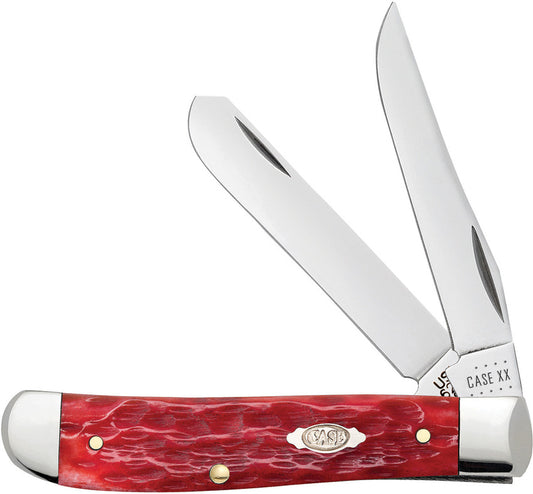
1. Case 31952 Mini Trapper Dark Red
A compact take on the legendary Trapper pattern, featuring a striking dark red bone handle. Ideal for everyday carry thanks to its smaller footprint without sacrificing the classic twin-blade Trapper functionality.
2. Case 204 Jumbo Stockman Folding Pocket Knife with Amber Bone Handle
The Jumbo Stockman is a three-blade workhorse with clip, sheepfoot, and spey blades in one knife, finished with rich amber bone handles. A favourite among UK smallholders and countryside professionals who need one tool for multiple jobs.
3. Case 163 Carbon Steel Trapper Knife with Amber Bone Handles
This classic Trapper pattern is fitted with carbon steel blades, prized by traditionalists for the ease of sharpening and the natural patina that develops with use, paired beautifully with warm amber bone scales.
4. Case 7049 Medium Stockman Folding Pocket Knife with Navy Blue Bone Handle
A slightly more compact Stockman with striking navy blue bone handles, offering the same versatile three-blade configuration in a size that's comfortable for all-day carry.
5. Case 07316 8 Inch Blade Chef's Knife with Solid Walnut Handle
Case's kitchen range brings the same old-world craftsmanship to the chopping board. This 8-inch chef's knife features a solid walnut handle and full-tang construction, built for serious home cooks and professionals alike.
6. Case 07315 6 Inch Boning Knife with Solid Walnut Handle
A precision kitchen tool designed for detailed butchery work, offering excellent flex and control paired with the same solid walnut handle found across Case's kitchen collection.
7. Case 52162 Tec X Harley Davidson Fixed Blade Knife
A striking collaboration piece combining Case's fixed-blade engineering with Harley-Davidson styling, a popular choice among UK collectors and Harley enthusiasts looking for something distinctive.
8. Case 372 Twin Finn Two Piece Set Fixed Blade Knife
A two-knife fixed blade set built for outdoor and hunting use, offering UK bushcraft and field-dressing enthusiasts a versatile pairing straight out of the box.
9. Case 07317 9 Inch Blade Slicer with Solid Walnut Handle
Designed for clean, precise slicing of roasts and large cuts of meat, this slicer rounds out Case's walnut-handled kitchen range with the length and flexibility serious cooks demand.
10. Case 07319 3 Inch Spear Point Blade Paring Knife with Solid Walnut Handle
A compact, detail-oriented paring knife ideal for precision kitchen tasks, proof that Case's craftsmanship translates just as well to the kitchen as it does to the field.
Caring for Your Case Knife
To keep a Case knife performing (and looking) its best for decades:
- Carbon steel blades should be wiped dry after use and lightly oiled to prevent rust and encourage an even patina.
- Bone handles benefit from an occasional light coat of mineral oil to prevent drying and cracking.
- Pivot points on folding knives should be kept clean and occasionally lubricated with a drop of knife oil.
- Walnut-handled kitchen knives should be hand washed only; never put through a dishwasher, as heat and moisture can damage the wood over time.
Frequently Asked Questions
1. Are Case knives legal to carry in the UK?
Case pocket knives are generally sold as non-locking folding knives with blades under 3 inches, which typically fall within UK legal carry guidelines. However, laws vary depending on locking mechanisms and blade length, so buyers should always check current UK knife legislation before carrying any knife in public.
2. Where are Case knives made?
The vast majority of Case knives are manufactured in Bradford, Pennsylvania, USA, where the company has operated since 1905.
3. What's the difference between carbon steel and stainless steel Case knives?
Carbon steel (CV) blades sharpen easily and develop a natural patina but require more maintenance to prevent rust. Tru-Sharp stainless steel blades resist corrosion better and require less upkeep, making them a popular choice for everyday carry.
4. Why are Case knives more expensive than other pocket knives?
Case knives use genuine bone and wood handle materials, traditional pinned construction, and blade steel that's ground and finished largely by hand in the USA, all of which add to production cost compared to mass-manufactured, glued, synthetic-handled alternatives.
5. Do Case knives hold their value as collectibles?
Yes. Case's tang stamp dating system allows collectors to identify the exact year a knife was made, and certain discontinued handle colours or limited-run patterns can appreciate over time.
Final Thoughts
Case knives have earned their reputation not through flashy marketing, but through generations of quiet, dependable performance the kind of craftsmanship that gets handed down rather than thrown away. Whether you're after a classic Trapper for everyday carry, a Stockman for the field, or a walnut-handled chef's knife for the kitchen, Case's UK range at MJ Outdoors Gear offers something for collectors and users alike.
Browse our full range of Case knives at MJ Outdoors Gear and find the pattern, steel, and handle material that's right for you.
-
Case Cutlery Mini Trapper Dark Red 31952
Buy Case Mini Trapper Dark Red 31952 for Sale i...Regular price £64.00Regular priceUnit price per£84.86Sale price £64.00Taxes included.Sold out -
Case Cutlery Jumbo Stockman Amber Bone
Case Cutlery Jumbo Stockman Pocket Knife – Ambe...Regular price £83.00Regular priceUnit price per£80.00Sale price £83.00Taxes included. -
Case Cutlery Trapper Amber Bone 00163
The Trapper Amber Bone 00163 is a premium tradi...Regular price £74.69Regular priceUnit price per -
Case Cutlery US Veterans Trapper 16300
The US Veterans Trapper 16300 is a premium trad...Regular price £142.25Regular priceUnit price per -
Case Cutlery Medium Stockman
Case Cutlery Medium Stockman Knife – Traditiona...Regular price £78.00Regular priceUnit price per£77.00Sale price £78.00Taxes included. -
Case Cutlery Peanut Hunter Green 70490
Closed: 2.875"; Blade: Stainless l Standard Edg...Regular price £66.00Regular priceUnit price per£76.00Sale price £66.00Taxes included.Sold out


-
Case Cutlery Boning Knife
Case Cutlery 6″ Boning Knife – High Carbon Stee...Regular price £52.00Regular priceUnit price per£50.00Sale price £52.00Taxes included. -
Case Cutlery Tec X Harley Davidson Fixed 52162
The Tec X Harley Davidson Fixed 52162 is an off...Regular price £47.61Regular priceUnit price per -
Case Cutlery Twin Finn Two Piece Set
Case Cutlery Twin Finn Two Piece Knife Set – Cl...Regular price £157.00Regular priceUnit price per£153.00Sale price £157.00Taxes included. -
Case Cutlery Slicer
Case Cutlery Slicer Knife USA Made – Case XX Ho...Regular price £59.00Regular priceUnit price per£56.00Sale price £59.00Taxes included. -
Case Cutlery Paring Knife
Case Cutlery Carbon Steel Paring Knife – Durabl...Regular price £38.00Regular priceUnit price per£38.00Sale price £38.00Taxes included. -
Case Cutlery Arkansas Sharpening Stone Soft 50303
Buy the Case Cutlery Arkansas Sharpening Stone ...Regular price £79.38Regular priceUnit price per


